Shifting Client Expectations
Japan’s wealth management market is sizeable, with assets under management exceeding USD 1 trillion. While traditional relationship‑driven advisory remains central, HNW clients are increasingly demanding digital touchpoints. Surveys show that over 60% of younger Japanese investors prefer mobile‑first access to portfolio information, while established families are beginning to embrace digital dashboards and real‑time reporting as a complement to trusted advisory relationships.
This generational shift is reshaping expectations: millennials and Gen Z clients, often globally exposed, expect the same speed and personalisation they see in other markets. Advisors who can blend digital convenience with cultural sensitivity are best placed to capture this evolving demand.
Technology as an Enabler, not a Replacement
Digital tools are enhancing, not replacing, the advisory role. AI‑driven analytics and predictive modelling are being deployed to support conversations around risk, asset allocation, and retirement planning. Cloud‑based platforms are gaining traction for scalability, while on‑premise solutions remain relevant for firms prioritising data control.
Hybrid models are proving most effective. Advisors can use technology to streamline compliance, automate reporting, and deliver personalised insights, freeing time for strategic dialogue with clients.
Regulatory and Market Dynamics
Japan’s Financial Services Agency (FSA) has historically taken a cautious approach to financial innovation, but recent reforms show growing support for digital wealth solutions. Stricter rules on data protection and cybersecurity are driving investment in secure advisory platforms.
At the same time, ESG investing is gaining momentum, with Japanese institutional investors increasingly demanding transparent sustainability metrics. Advisory firms are responding by embedding ESG dashboards and impact measurement tools into client reporting.
The longevity economy is another defining trend: with nearly 30% of Japan’s population aged 65 or older, advisors are under pressure to provide robust retirement income strategies. Digital platforms that integrate healthcare data and scenario modelling are becoming essential tools in this space.
Our Perspective on Japan’s Advisory Landscape
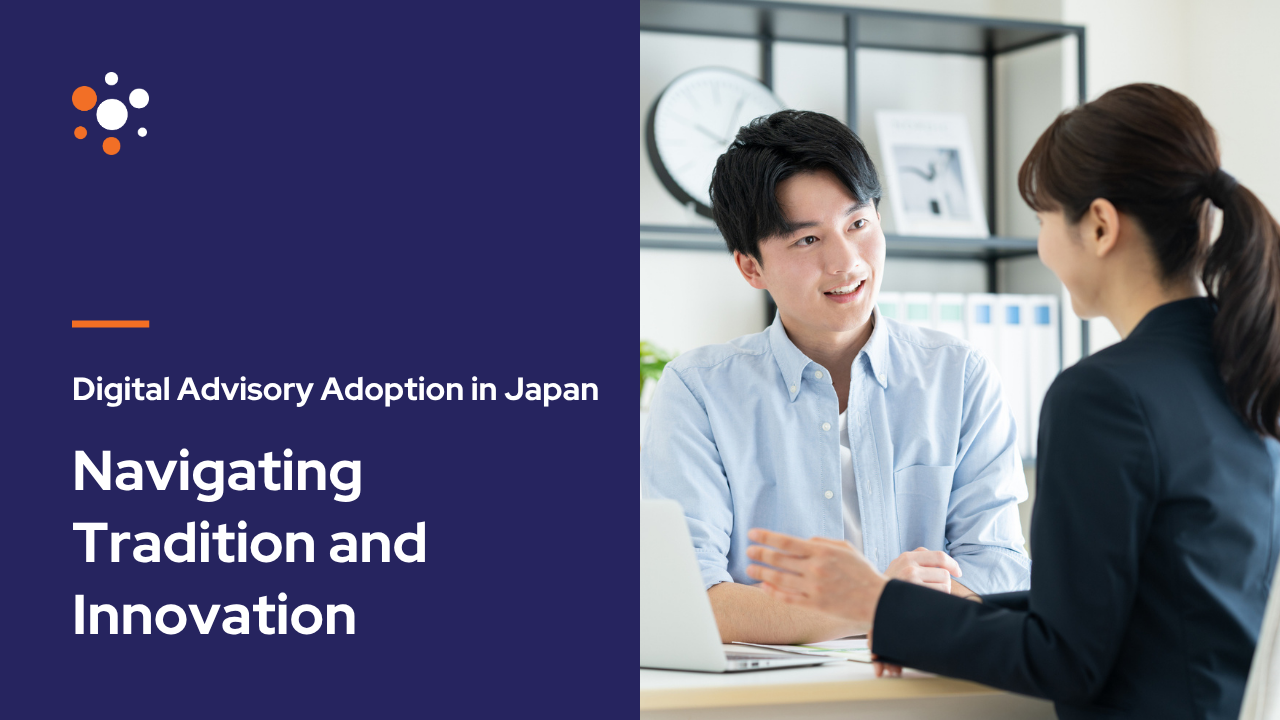
From our vantage point, Japan represents a market where tradition and innovation coexist. Digital adoption is not about disruption but about strengthening trusted advisory relationships. We have seen firsthand, through our work with clients in Japan, that technology can reinforce the human element of wealth management. By respecting cultural preferences for trust and long‑term relationships while introducing digital capabilities, advisors can deliver outcomes that are both modern and deeply aligned with client expectations.
Conclusion
Japan’s wealth management sector is embracing digital advisory in a way that reflects its distinctive market dynamics. Advisors who combine innovation with tradition are best positioned to serve HNW clients effectively. As partners in this journey, we are proud to support clients in Japan as they navigate this evolving landscape.